
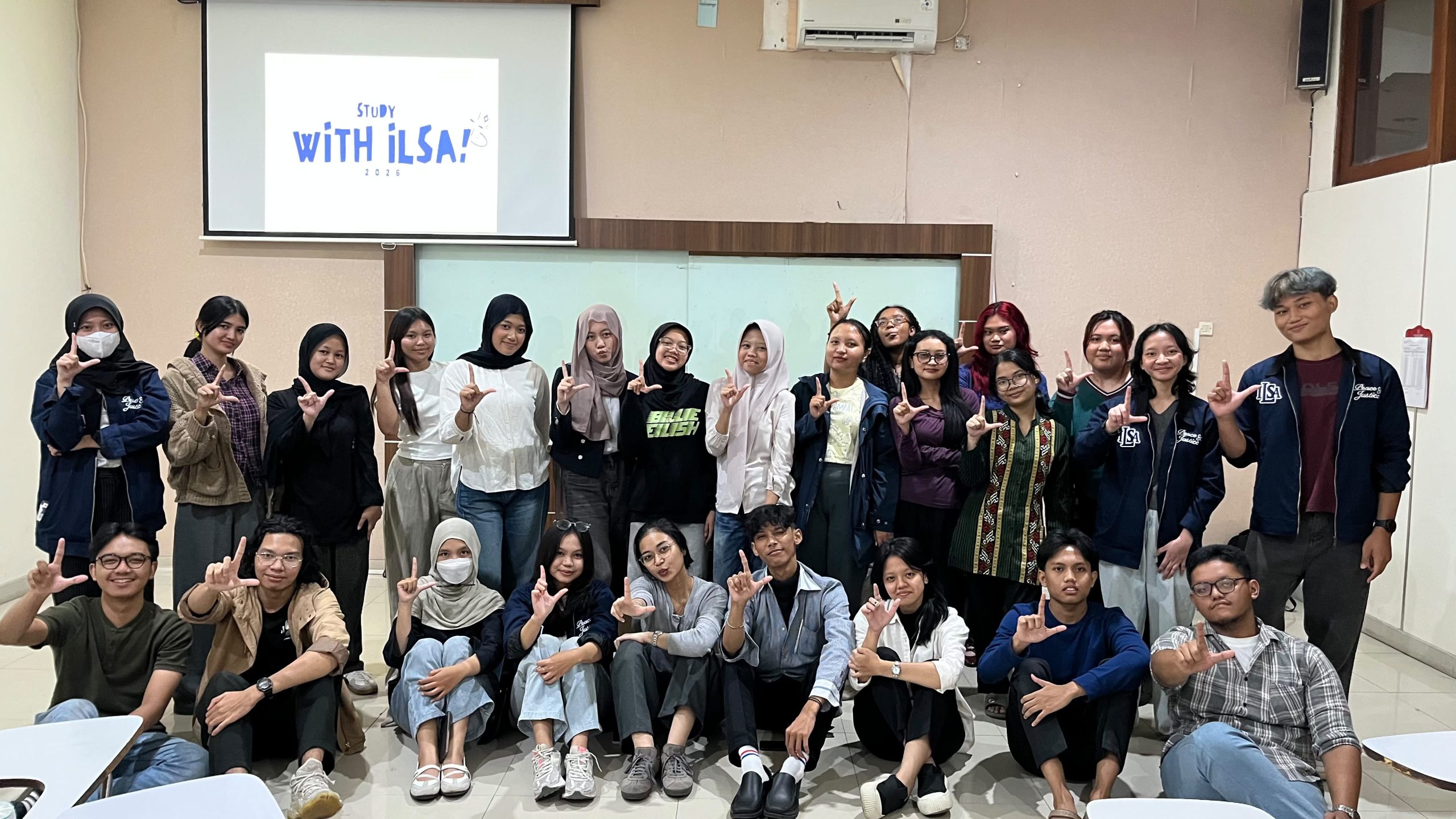
On 13 May 2026, as part of its commitment to creating a collaborative and intellectually engaging learning environment, International Law Students Association (ILSA) proudly conducted another session of Study With ILSA (STUSA) under the theme “Who is Accountable in the Sky?: Aircraft Hijacking in the Lens of International Law.” Carrying a topic closely related to contemporary international legal issues, this session invited participants to examine how international law responds to aircraft hijacking cases that often involve complex jurisdictional and transnational elements.
Aircraft hijacking has long been recognized as a serious threat to international civil aviation and global security. Through this session, participants were introduced to the legal framework established by several international conventions that specifically regulate unlawful acts committed on board aircraft. The discussion highlighted the significance of the Tokyo Convention 1963 in addressing offenses committed during flight, the Hague Convention 1970 in criminalizing aircraft hijacking and obligating states to prosecute or extradite offenders, as well as the Montreal Convention 1971 which expands international protection against acts threatening aviation safety. By examining these legal instruments, participants gained a deeper understanding of how international law develops mechanisms to maintain order and security within international airspace.
More than simply discussing legal theories, this Stusa encouraged participants to connect international legal principles with real-life situations. Participants analyzed how aircraft hijacking cases may involve multiple states simultaneously, such as the state of aircraft registration, the state where the aircraft lands, the nationality of the perpetrators, and the nationality of the victims. These overlapping elements often create complicated questions regarding jurisdiction and legal accountability. Through collective discussion, participants explored how international cooperation and diplomatic coordination become essential in ensuring effective law enforcement in transnational aviation crimes.
The Forum Group Discussion (FGD) session became one of the highlights of the event, as participants actively exchanged insights and perspectives regarding the application of international law in aircraft hijacking cases. The interactive nature of the discussion created an open academic space where participants were encouraged to think critically, express opinions confidently, and respond to various legal arguments from different perspectives. The session reflected the importance of discussion-based learning in developing analytical skills and fostering a deeper understanding of international legal issues among students.
To maintain an enjoyable and interactive atmosphere throughout the event, the committee also incorporated several ice breaking activities between sessions. These activities successfully encouraged participants to engage more comfortably with one another, creating a balance between academic discussion and casual interaction. The enthusiasm shown by participants during both the discussions and the games demonstrated the positive learning environment fostered during the event. Moments of active participation, laughter, and thoughtful conversation became valuable memories captured throughout this Stusa session.
Through this event, ILSA once again provided a platform for students to broaden their perspectives on contemporary issues in international law while strengthening their critical thinking and communication skills. The discussion on aircraft hijacking not only emphasized the importance of legal regulation in international aviation, but also highlighted the necessity of cooperation among states in addressing crimes that transcend national borders. It is hoped that this session will inspire participants to continue exploring international legal developments and contribute actively to future academic discussions within ILSA.
Lastly, we would like to extend our sincere appreciation to all committees and participants whose enthusiasm and contributions made this event possible. The success of this Stusa reflects the collective spirit of learning, sharing, and growing together as members of the academic community. We look forward to meeting everyone again in the next inspiring session of Stusa